 Skip to content
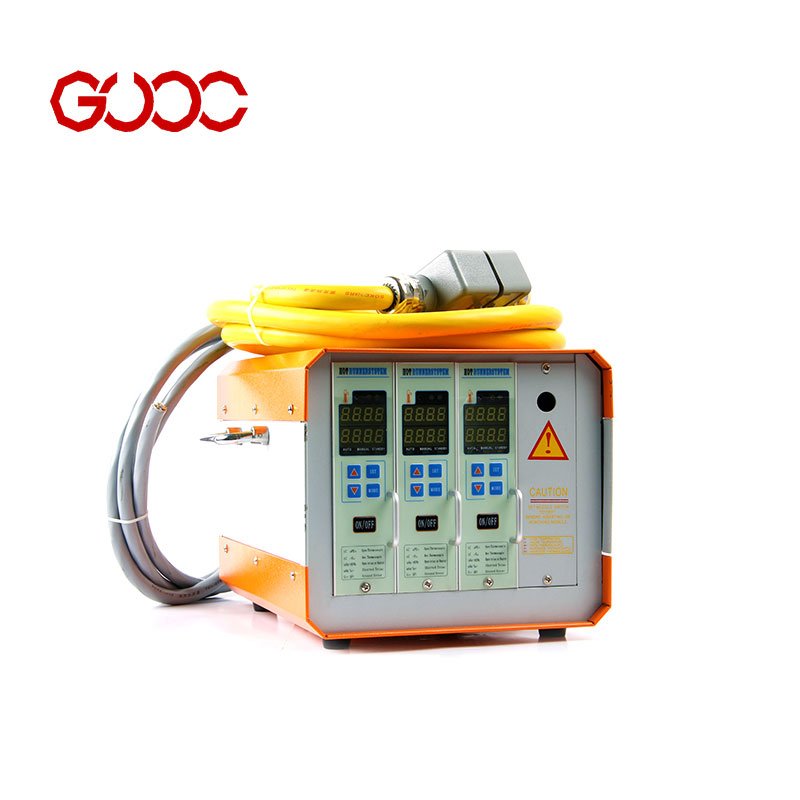
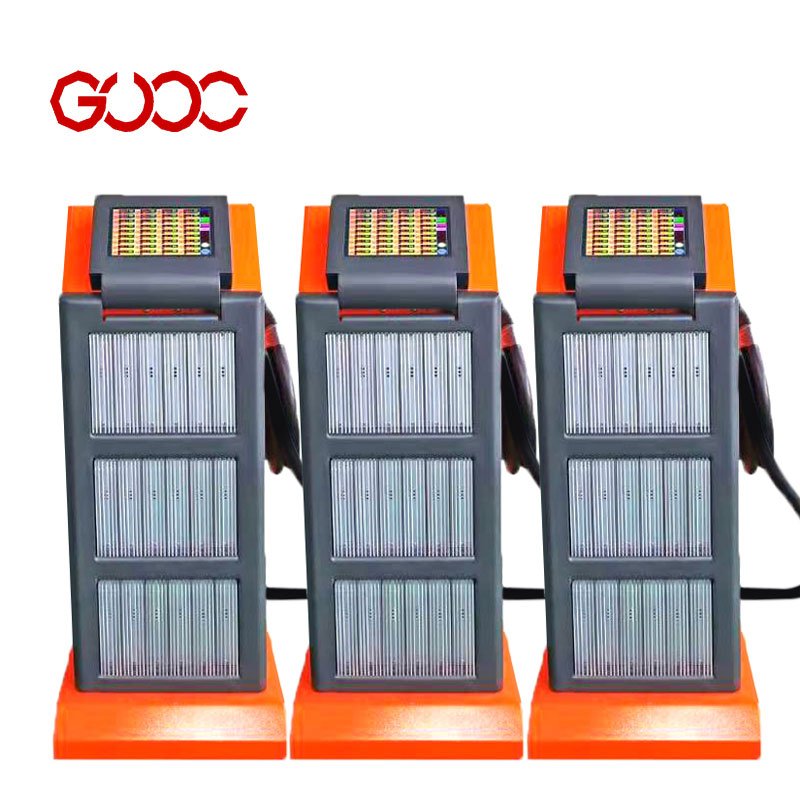
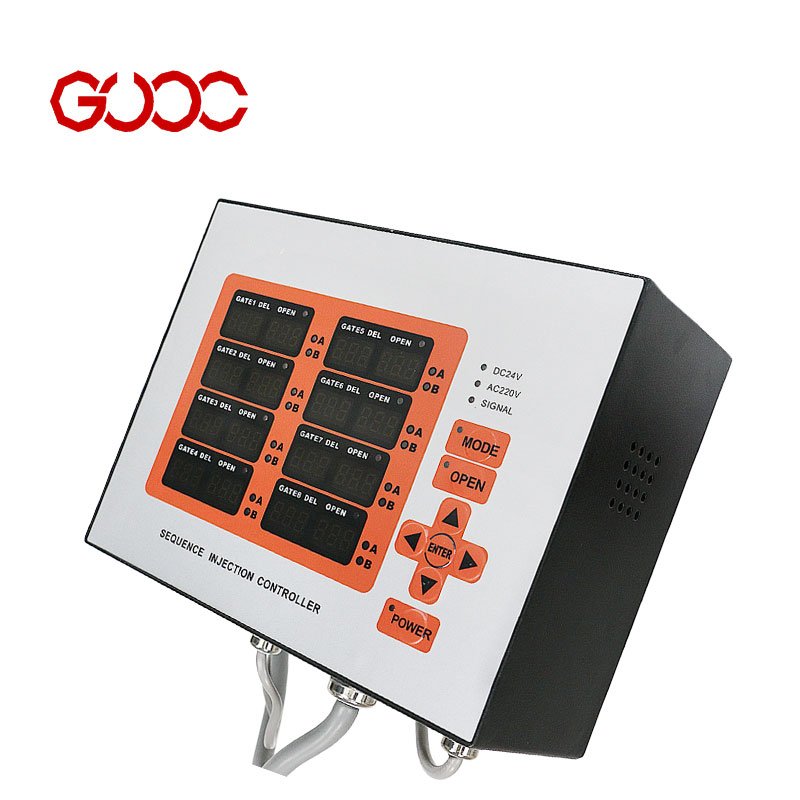
A flashing error code on your hot runner controls isn’t just a nuisance—it’s a critical warning flashing in real time. Whether it’s an OPEN thermocouple, a SHORT circuit, or a confusing REV polarity alert, understanding these codes can mean the difference between extended downtime and a quick restart. This guide cuts through the jargon, revealing exactly how your controller \”thinks,\” why faults happen, and how you can swiftly decode and resolve alarms. If you’re managing injection molding systems, mastering these codes isn’t optional—it’s essential for seamless production and smarter maintenance.
The Anatomy of a Control Code: How Logic Modules \”Think\”
Understanding hot runner controls code starts with grasping how the logic modules operate at the core. These modules function like the brain of the system, continuously monitoring temperatures and electrical signals. Using PID temperature control logic, they adjust heater output to keep the manifold stable and avoid fluctuations that could affect part quality.
The system relies on a feedback loop where sensor data from thermocouples feeds back into the controller. This loop lets the PID algorithm detect deviations instantly and correct errors by adjusting the power delivered to each zone. It’s a precise “think and act” cycle that keeps the injection molding process on track.
When issues arise, the system distinguishes between hard faults and soft alarms:
- Hard faults trigger immediate shutdowns. Think of these as serious issues like triac short circuit faults or open loop alarms, where continued operation risks equipment damage or safety hazards.
- Soft alarms serve as warnings. They indicate irregularities such as minor temperature deviations without stopping production, giving operators time to troubleshoot before escalation.
This tiered approach helps reduce downtime by allowing quick responses to problems while maintaining production flow when possible. Understanding how these core control codes “think” keeps your troubleshooting focused and efficient, crucial for minimizing injection molding downtime.
Critical Alarm Categories and Diagnostic Logic
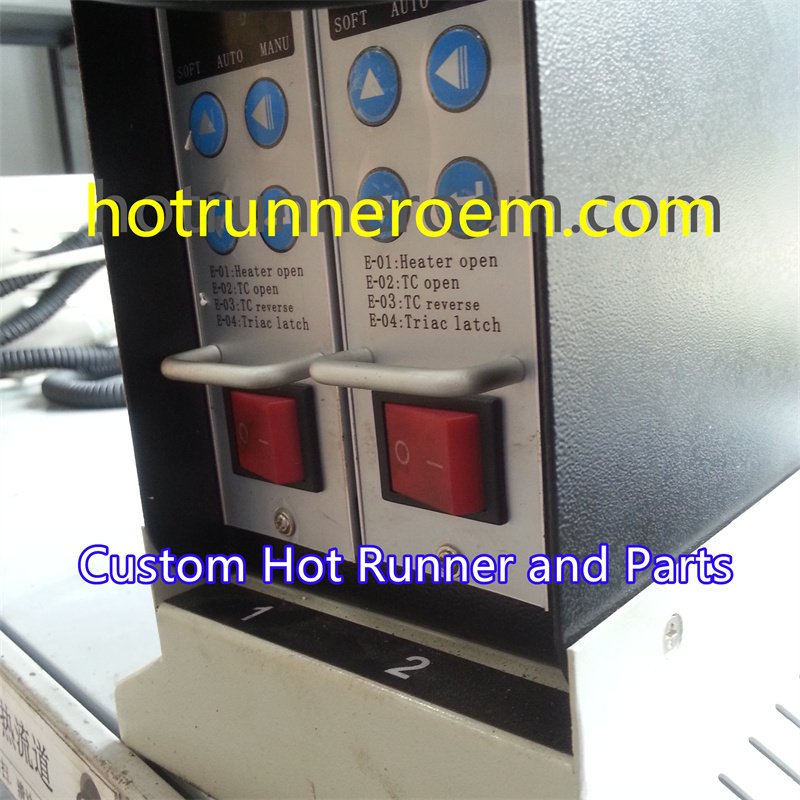
In hot runner controls, understanding critical alarms is key to avoiding costly downtime. Here’s a quick breakdown of the most common alarms and what they mean.
Thermocouple (TC) Integrity Alarms
- Open TC Alarm: Happens when the thermocouple wire breaks or disconnects, causing no temperature signal. The controller flags this immediately for safety.
- Reverse Polarity: If the thermocouple wiring is flipped, the temperature reading can invert, leading to wrong control actions. This fault triggers an alarm to prevent overheating or underheating.
Heater Element Feedback Alarms
- Short Circuit Fault: When the heater element shorts internally, the current spike causes a shutdown. The system detects this by monitoring amperage.
- Amperage Spikes: Sudden current increases might mean partial shorts or wiring damage and warn of an impending failure.
- Heater Degradation: Gradual resistance changes, caught by the control logic, signal wear and eventual element failure.
Power Module & Triac Status Alarms
- STO Fault (Short Triac Open): This fault occurs when a triac fails to switch on properly, disrupting heating cycles and causing uneven temperature zones. It requires fast module checks or replacements.
- Impact on Operation: STO faults often lead to immediate shutdowns, as they directly affect heater safety and control accuracy.
| Alarm Type | Cause | Effect | Action Needed |
|---|---|---|---|
| Open TC | Broken/disconnected wire | No temp input | Check/replace thermocouple |
| Reverse Polarity | Incorrect wiring | Wrong temp readings | Rewire thermocouple |
| Heater Short Circuit | Element fault | Current surge/shutdown | Inspect/replace heater |
| Amperage Spike | Wiring/partial shorts | Warning/alarm | Monitor, inspect cable |
| Heater Degradation | Resistance change | Fault warning | Plan heater replacement |
| STO Fault (Triac Open) | Triac switch failure | Zone heating failure | Power module check/swap |
Knowing these alarms and diagnostic logic helps us spot problems early and keep production running smoothly. Monitoring heater amperage, thermocouple signals, and triac status lets you catch faults before they cause downtime or damage.
The \”Phantom\” Codes: When the Controller is Innocent
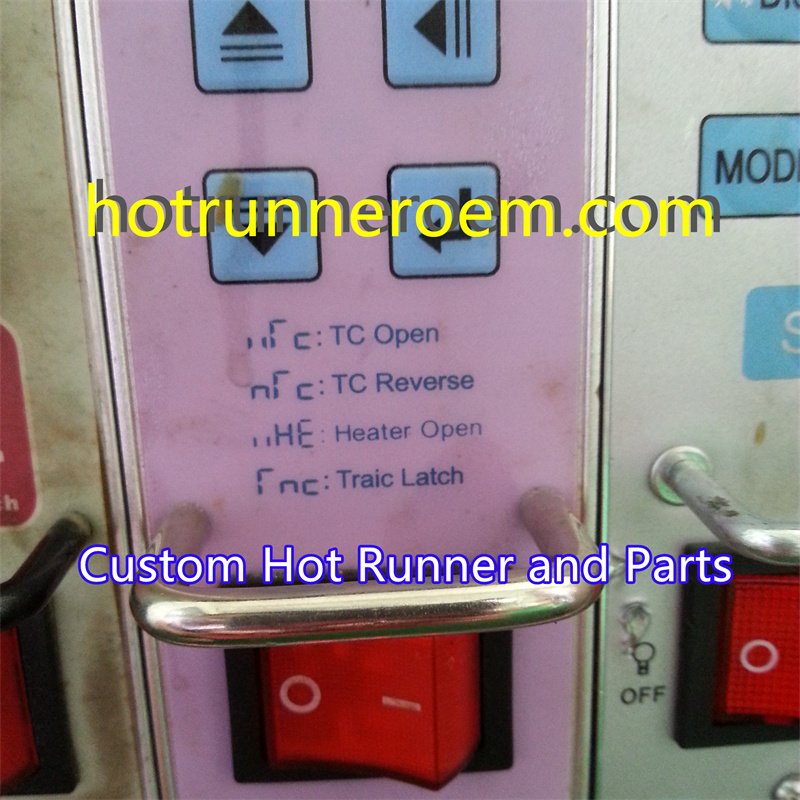
Sometimes, the hot runner controls code throws errors that don’t actually come from a real problem inside the system. These \”phantom\” codes can be maddening because they point to faults that aren’t there, often caused by external factors rather than the controller itself.
Wiring & Connector Issues: Dirty Pins and Crushed Cables Causing False Errors
One of the biggest culprits behind these false alarms is poor wiring and connector conditions. Dirty pins, corrosion, or bent connectors in the hot runner cable pinout can create bad electrical contacts. Similarly, cables that are crushed, pinched, or twisted can disrupt signal flow and trigger error codes like open loop alarms or thermocouple reverse polarity warnings. Often, a simple cleaning or replacing a damaged harness resolves the issue without any deeper electrical troubleshooting.
Ground Loops: Electrical Noise Generating False Alarms
Ground loops happen when multiple grounding points create a loop that conducts stray currents. This can introduce electrical noise into the sensors and feedback circuits, triggering erratic alarms such as triac short circuit faults or heater resistance measurement errors. These false signals confuse the multi-zone controller calibration and lead to needless downtime. Addressing grounding methods and eliminating redundant ground paths usually clears up the interference.
Environment Factors: Humidity Effects on Soft Start Failures
Environmental conditions often get overlooked but have a big impact on hot runner controls. High humidity can cause moisture buildup inside connectors or control cards, leading to errors during soft start sequences—the time when the system gradually powers up heaters to reduce stress. Moisture can cause soft start bake-out function failures or intermittent solid state relay (SSR) failure indications. Keeping the control cabinet dry and ensuring proper ventilation is key, especially in humid climates.
By understanding these non-system causes of error codes, we can avoid unnecessary shutdowns and improve injection molding uptime. Phantom codes usually mean it’s time to inspect wiring, connectors, grounding, and environmental conditions before diving into complex repairs.
Advanced Diagnostics in China Hot Runner System Controls
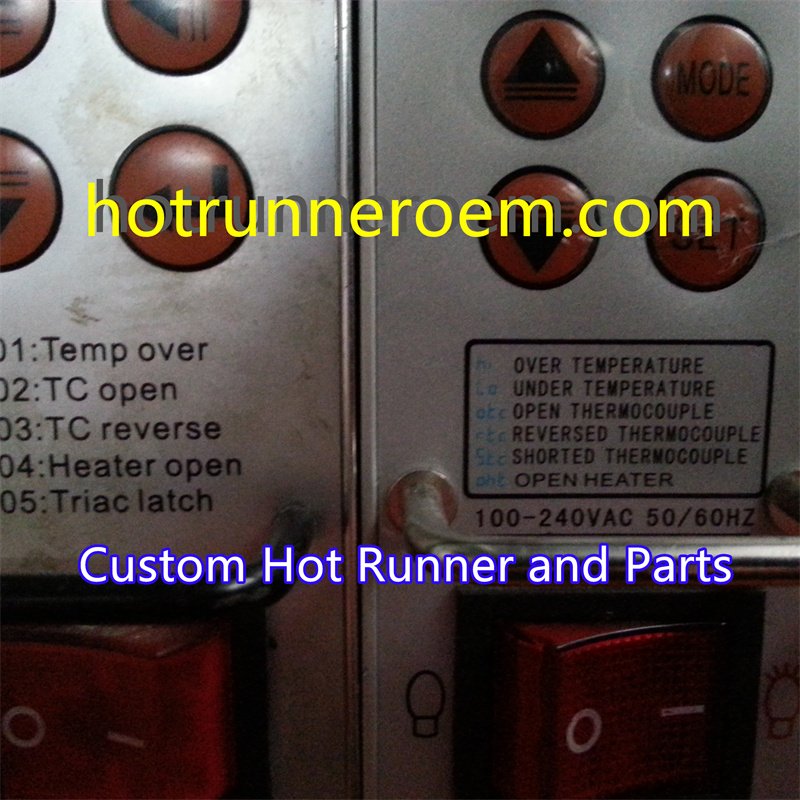
Modern China hot runner system controls come packed with smart diagnostic features that make troubleshooting and maintenance faster and more reliable. These advancements keep your injection molding downtime low and your system running smoothly.
Amperage Monitoring for Early Fault Detection
Continuous amperage draw monitoring tracks heater current changes in real-time. This helps spot issues like:
- Heater degradation
- Short circuits
- Wiring faults
before they cause major failures. Detecting these early saves costly downtime by allowing planned maintenance.
Soft Start Logic with Bake-Out Function
Moisture inside heater elements or cables can trip alarms unnecessarily. The soft start logic includes a bake-out function which:
- Gradually increases heater power
- Evaporates residual moisture
- Prevents soft start failures caused by humidity
This reduces false alarms and protects sensitive components.
Modular Swap-Outs for Quick Fault Isolation
Modern controllers use hot-swappable cards, making it easy to isolate and replace faulty modules without stopping production for long. Benefits include:
| Feature | Benefit |
|---|---|
| Plug-and-play modules | Fast repairs |
| Individual zone replacement | Minimal mold downtime |
| Simplified troubleshooting | Reduces troubleshooting errors |
This modular design supports smooth operations and cost-effective service.
For more about how advanced controls improve mold heating reliability, check out our detailed hot runner system manufacturer resources.
These diagnostic features collectively enhance uptime, boost productivity, and simplify maintenance for global users of advanced hot runner controls.
Best Practices for Clearing Codes and Resuming Production
When troubleshooting hot runner controls code errors, it\’s key to follow a clear process that keeps safety and efficiency in check.
Safety First: Resistance Checks Before Reset
Before you clear any alarms, always measure the heater resistance. This helps confirm there’s no hidden short circuit or heater degradation. Skip this, and you risk restarting with a faulty element, which can cause downtime or safety hazards.
- Use a reliable ohmmeter to check each heater element.
- Compare values against manufacturer specs or baseline data.
- If resistance values are off, fix the issue before resetting.
Reset Sequence: Correct Power Cycling Matters
To clear latching alarms or hard faults, a proper reset sequence is essential.
- Turn off power to the hot runner control system completely.
- Wait a few seconds to allow capacitors to discharge.
- Power the system back up to clear persistent alarms.
- Avoid “hot resets” that can cause incomplete fault clearing or damage.
Documentation: Log Recurring Codes for Maintenance
Keep a detailed record of all alarm codes and when they occurred. This helps identify patterns like thermocouple reverse polarity or triac short circuit faults that might signal bigger mold or wiring problems.
- Note alarm type, zone affected, and error frequency.
- Share logs with maintenance teams to schedule inspections or replacements.
- Use consistent code descriptions from the mainframe diagnostic module for clarity.
By following these steps carefully, you minimize injection molding downtime and extend the life of your industrial mold heating elements. Proper documentation and safety checks set you up for smooth, efficient production runs every time.
 English
  Spanish
  French
  Portuguese
  Italian