 Skip to content



Anatomy of High-Performance Torpedo Tips
The Conduction Core: Internal Structure and Design Choices
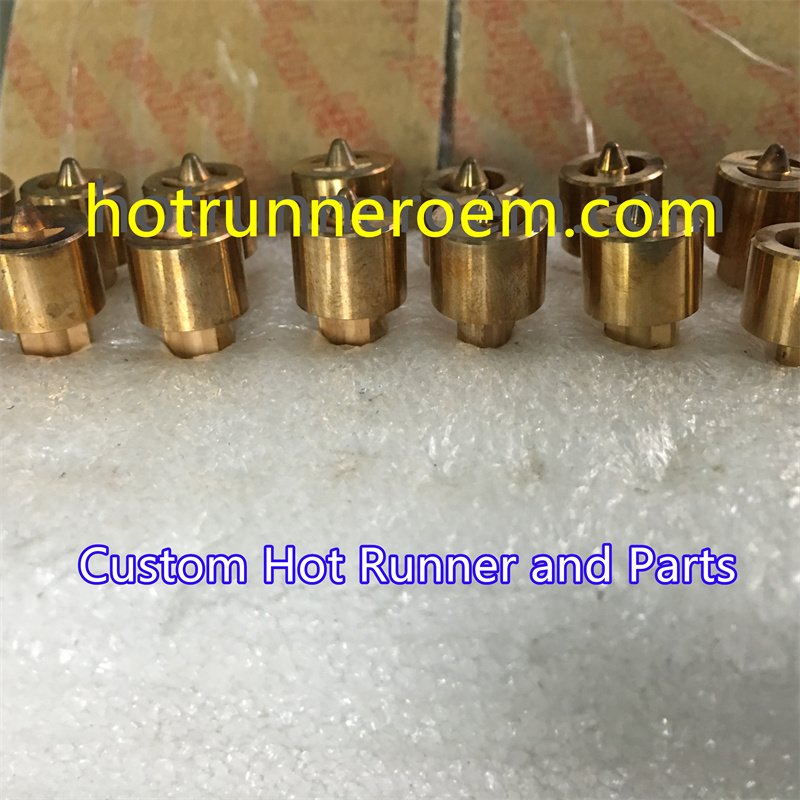
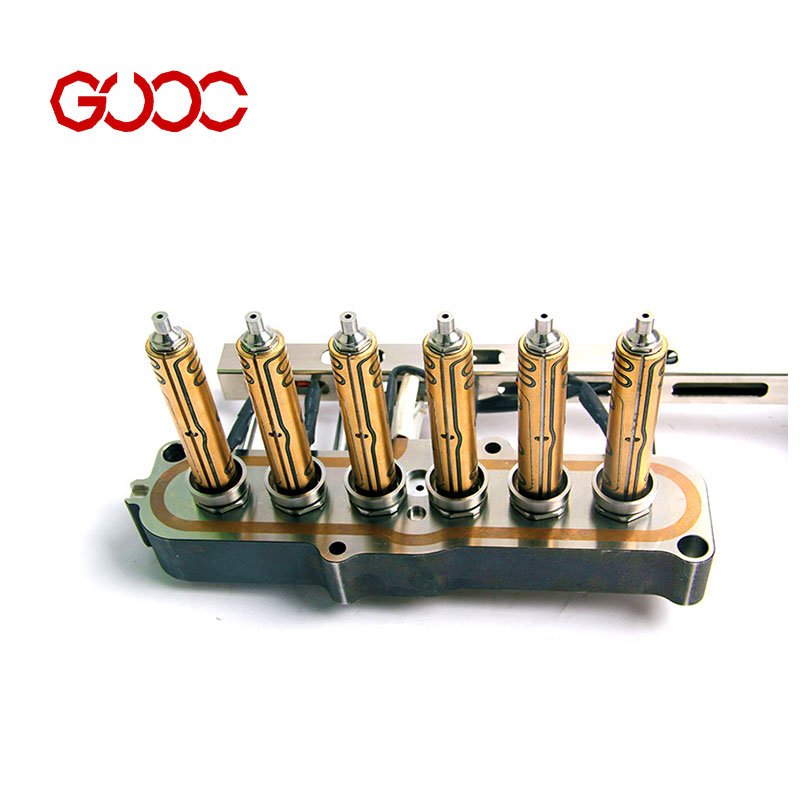
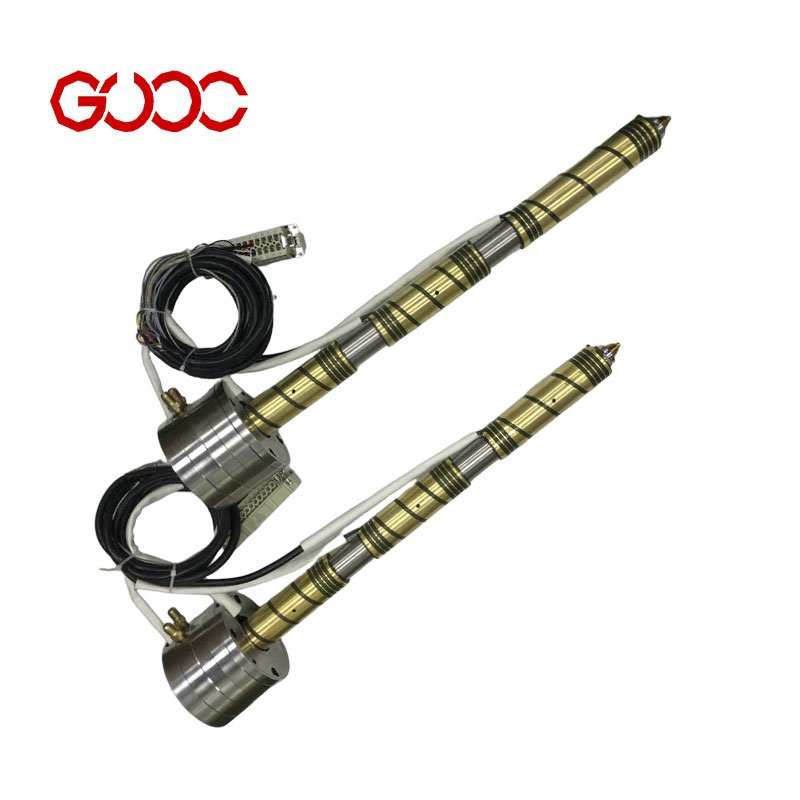
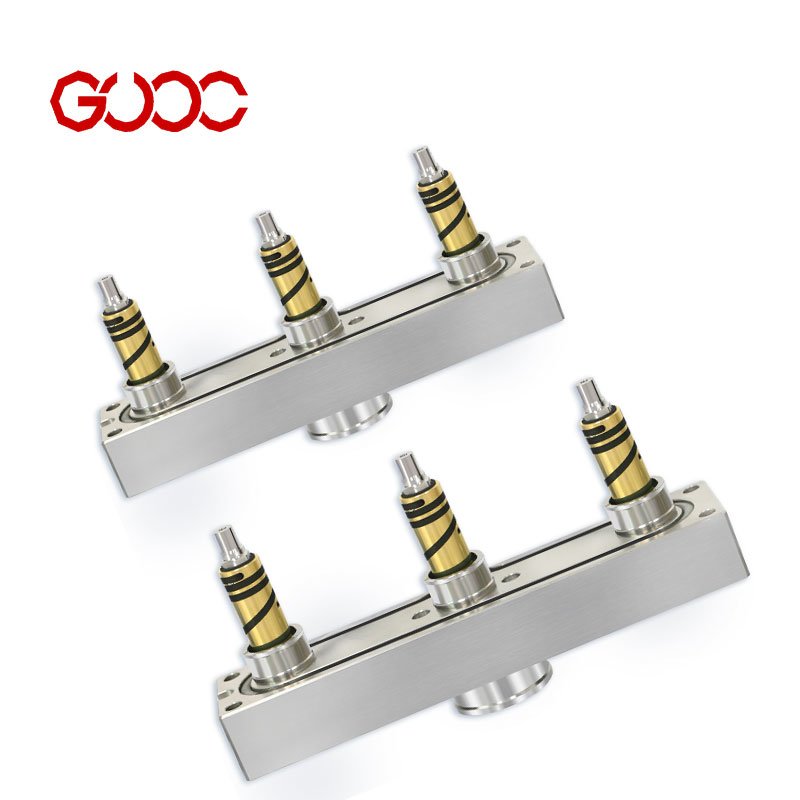
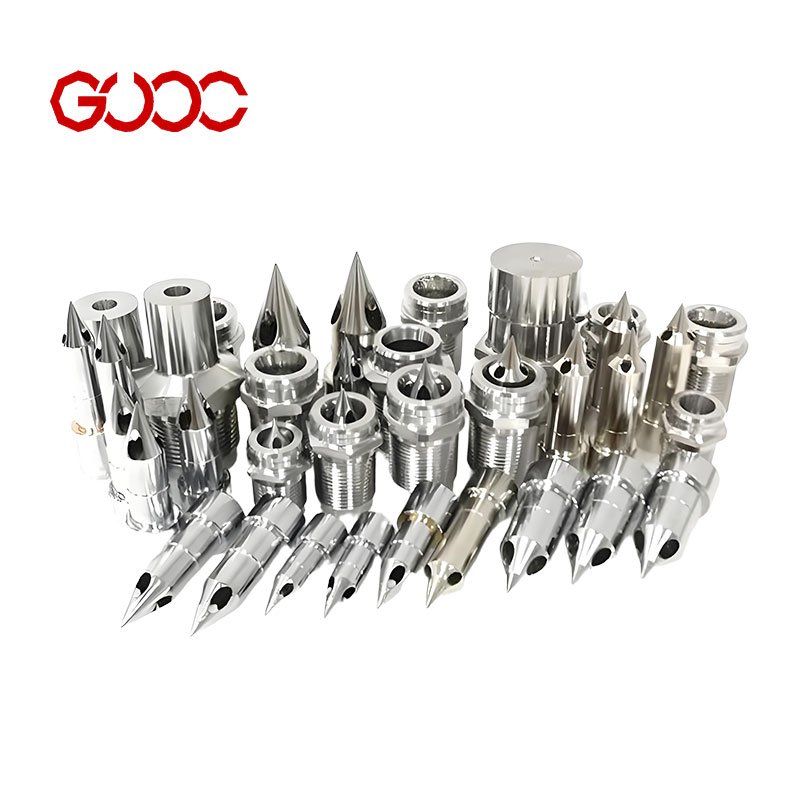
At the heart of any hot runner system torpedo tip is the conduction core. Its design dictates how efficiently heat transfers from the heater to the polymer melt. Two primary types dominate:
- Solid Tips: Machined from a single piece of high-conductivity metal, typically beryllium copper alloys, these tips offer minimal thermal resistance and provide consistent heat input across the melt path.
- Insert Tips: Featuring a high-conductivity insert embedded within a steel or carbide body, insert tips combine wear resistance with enhanced thermal gating efficiency in critical zones.
Shank diameter is equally crucial. Larger diameters increase thermal mass, stabilizing temperature but can raise melt residence time and injection pressure loss. A balanced diameter ensures enough heat input without excessive pressure drop or material degradation.
The Insulation Gap: Preventing Heat Sink Effects
A well-designed insulation gap is essential to preserve the heat within the torpedo tip and avoid unwanted heat loss to the mold base. Typically, an air gap or ceramic insulation layer is positioned between the tip body and the mold plate.
Key considerations include:
- Air Gap Width: Optimized to minimize conduction to the mold while maintaining mechanical integrity.
- Thermal Separation Zone: Prevents the mold from acting as a heat sink, reducing tip freezing and gate area cooling issues.
- Material Choices: Use of low thermal conductivity insulators enhances overall system efficiency, maintaining a consistent thermal profile at the nozzle tip geometry.
Together, the conduction core and insulation gap design directly affect melt temperature stability, gate vestige control, and tip freezing prevention—critical factors in achieving consistent shot quality.
Geometric Variables in Hot Runner Torpedo Tip Design
When designing a hot runner system torpedo tip, geometry plays a key role in optimizing thermal gating efficiency and product quality.
- Point Angle: For commodity resins with lower viscosity, tips with a sharper, acute angle promote smooth flow and reduce injection pressure loss. In contrast, high-viscosity materials require obtuse or flatter tip angles to prevent excessive shear and enable steady melt residence time. Adjusting this angle improves melt flow and reduces common defects like tip freezing.
- Land Length and Gate Engagement: The length of the tip’s land directly influences how deeply it penetrates the gate. Optimal engagement controls gate freeze time, crucial for maintaining consistent gate area cooling and preventing material drooling. Too short a land may cause cold slugs; too long may restrict flow and raise pressure.
- Flow Channels: The design of internal melt flow channels must balance pressure drop with flow uniformity to ensure consistent shear rate optimization. Properly sized and shaped flow paths maintain structural integrity of the torpedo body insulation, avoiding hotspots while minimizing injection pressure loss. This helps maintain a stable thermal separation zone essential for quality molding.
For more on optimizing nozzle tip geometry within hot runner systems, you can check out our detailed hot runner system nozzle design resources. Understanding these geometric factors helps us tailor torpedo tips perfectly for different resins and processing conditions.
Material Science in Torpedo Tip Design: Balancing Conductivity and Durability
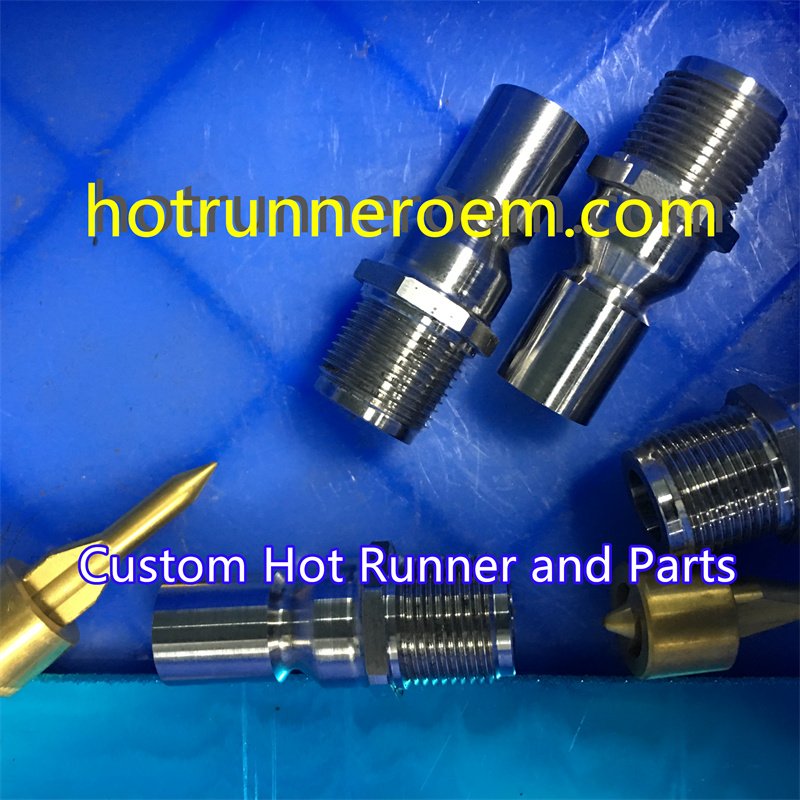
Choosing the right material for hot runner system torpedo tip design is a delicate balance between thermal conductivity and wear resistance.
Beryllium Copper Alloys are a popular choice because of their excellent thermal conductivity, which improves thermal gating efficiency by quickly transferring heat to the melt. This helps reduce melt residence time and avoids cold spots. However, their wear resistance can be limited, especially when processing abrasive or filled materials, making them less ideal for long production runs with high wear demands.
For tougher applications, Carbide and Steel Tips come into play. Though these materials have much lower thermal conductivity than beryllium copper, they offer superior durability and wear resistance. Designing tips with these materials often involves compensating for the slower heat transfer by adjusting tip geometry or integrating insulating elements to maintain stable melt temperature and prevent gate freezing issues.
Advanced Coating Technologies like Nickel plating and PVD (Physical Vapor Deposition) coatings provide a protective layer on tip surfaces. These coatings improve corrosion resistance and extend tip life without significantly affecting thermal properties. Coatings are especially valuable in hot runner systems dealing with fillers or corrosive additives, reducing maintenance downtime.
Finding the right balance of material and coatings is key to optimizing nozzle tip geometry for your specific resin and process needs. For deeper insight into temperature control strategies that complement material choices, check out our detailed resources on hot runner temperature controllers.
Matching Design to Resin Characteristics
Adapting the hot runner system torpedo tip design to the type of resin is key for efficient molding and high-quality parts. Different polymers need different thermal profiles and tip geometries to avoid common issues like drooling, cold slugs, or wear.
Crystalline Polymers
For semi-crystalline resins, the tip should create sharp thermal breaks to prevent drool at the gate. This means maintaining a clear thermal separation zone near the tip, minimizing premature melt flow. A design that controls heat transfer coefficient carefully around the torpedo body insulation keeps the resin’s crystallization controlled, reducing gate vestige.
Amorphous Polymers
Amorphous polymers need smoother thermal transitions through the tip to avoid cold slug formations and cosmetic defects. Gradual temperature drops help maintain melt integrity. Optimizing nozzle tip geometry for amorphous polymer flow ensures consistent shear rates and steady melt residence time, which prevents surface blemishes and incomplete gate freeze.
Filled Materials
When running filled or abrasive resins, tip design focuses on wear resistance and service life. A proper wear allowance with replaceable tip inserts or hardened coatings like PVD can extend the tool life. The design must also account for slight dimensional changes to maintain gate area cooling effectiveness despite added filler materials.
For precise thermal and flow control, integrating sensors or heaters can optimize the hot runner performance—our hot runner temperature sensor solutions enable real-time adjustments to suit resin characteristics.
By tailoring the torpedo tip design to the resin’s unique processing needs, we enhance thermal gating efficiency, reduce defects, and extend component life in your hot runner systems.
Troubleshooting Common Defects via Tip Redesign
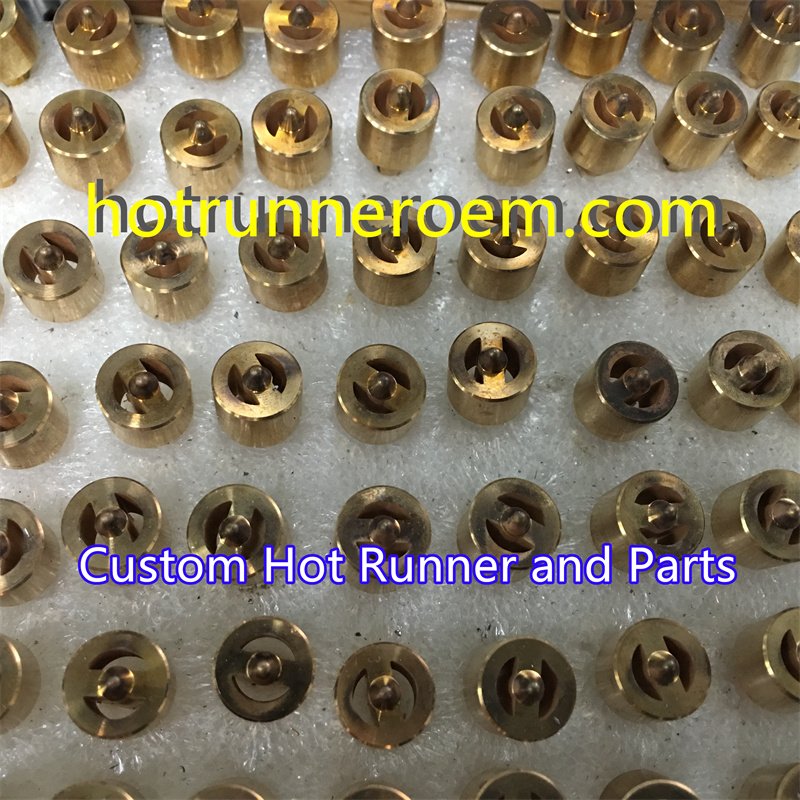
When dealing with defects like stringing and drooling, the root often lies in the nozzle tip geometry. Stringing typically happens when melt oozes out during non-injection phases due to insufficient thermal gating efficiency. To fix this, adjusting the torpedo tip’s point angle or modifying the thermal separation zone can help control melt flow, reducing unwanted drool. Sharper angles tend to cut off flow more cleanly, especially with commodity resins.
Vestige height issues call for a close look at the tip profile and gate freeze time. If the vestige is consistently high, tweaking the land length and improving tip penetration into the gate can promote faster solidification, ensuring clean gate separation. It’s essential to balance the injection pressure loss and shear rate optimization here to avoid causing other flow problems.
Cold slugs usually stem from heat loss in the tip and inadequate insulation around the torpedo body. Enhancing the air gap insulation and revising the tip’s internal heating design help maintain a stable heat transfer coefficient. This prevents the formation of cold material pockets that degrade surface finish and lead to molding defects. Sometimes, a redesign incorporating wear-resistant tip coatings also supports consistent temperature profiles and longevity under high thermal loads.
For tailored solutions targeting these issues, our expertise in custom hot runner system torpedo tip design is backed by detailed flow analysis and precision manufacturing. You can explore how advanced hot runner control and injection mold technologies support defect-free production on our site.
Explore more about optimizing tip designs with our hot runner system injection mold solutions and advanced hot runner system control methods for precise thermal management.
Customization Capabilities at China Hot Runner System
At our China hot runner system manufacturing facilities, customization is a core strength. We leverage advanced engineering analysis, including detailed flow simulation, to optimize torpedo tip geometry precisely for your mold and resin needs. This approach ensures thermal gating efficiency and reduces injection pressure loss, helping you avoid common issues like tip freezing or uneven gate area cooling.
Our bespoke manufacturing process allows us to craft custom tip profiles tailored to unique gate designs and challenging materials such as semi-crystalline resins, filled polymers, or amorphous polymers. Whether you require specific point angles or tailored land lengths, we can deliver hot runner system torpedo tip designs that improve shear rate optimization and overall melt residence time.
Quality assurance remains a priority — each tip undergoes strict dimensional accuracy checks and concentricity inspections to meet high standards. This attention to detail enhances wear-resistant tip coating performance and ensures consistent thermal separation zones, providing long-term durability. For more on maintaining hot runner performance, check out our detailed hot runner cleaning techniques and system maintenance insights.
 English
  Spanish
  French
  Portuguese
  Italian